
A full breakdown of what corporate video production services include at each phase — pre-production through delivery — and what drives cost at each stage.
What You'll Learn
- Every phase of corporate video production from brief to delivery
- What's included at different budget levels
- Common scope additions that expand projects after they start
- How to read a production proposal and what to look for
Corporate video production services covers a broad scope. A proposal for a single 90-second brand video and a proposal for a full-year content program can both be described as ‘corporate video production services.’ Understanding what’s actually included at each phase, and what commonly gets added after a project starts, helps you evaluate proposals accurately and budget realistically.
Phase 1: Pre-production
Pre-production is everything that happens before the cameras roll. It’s also where most of a production’s quality is determined, and where the most time and budget can be saved or wasted.
What pre-production includes: Creative brief alignment and concept development, script or shot list development, storyboarding (for scripted or complex productions), location scouting and permitting, casting (talent, presenters, interview subjects), crew contracting, equipment planning, logistics coordination for travel or complex setups, and production schedule development.
Pre-production typically represents 15–25% of total project cost on a well-run production. Projects that compress this phase pay for it in reshoots, scope changes, and difficult post-production.
Phase 2: Production
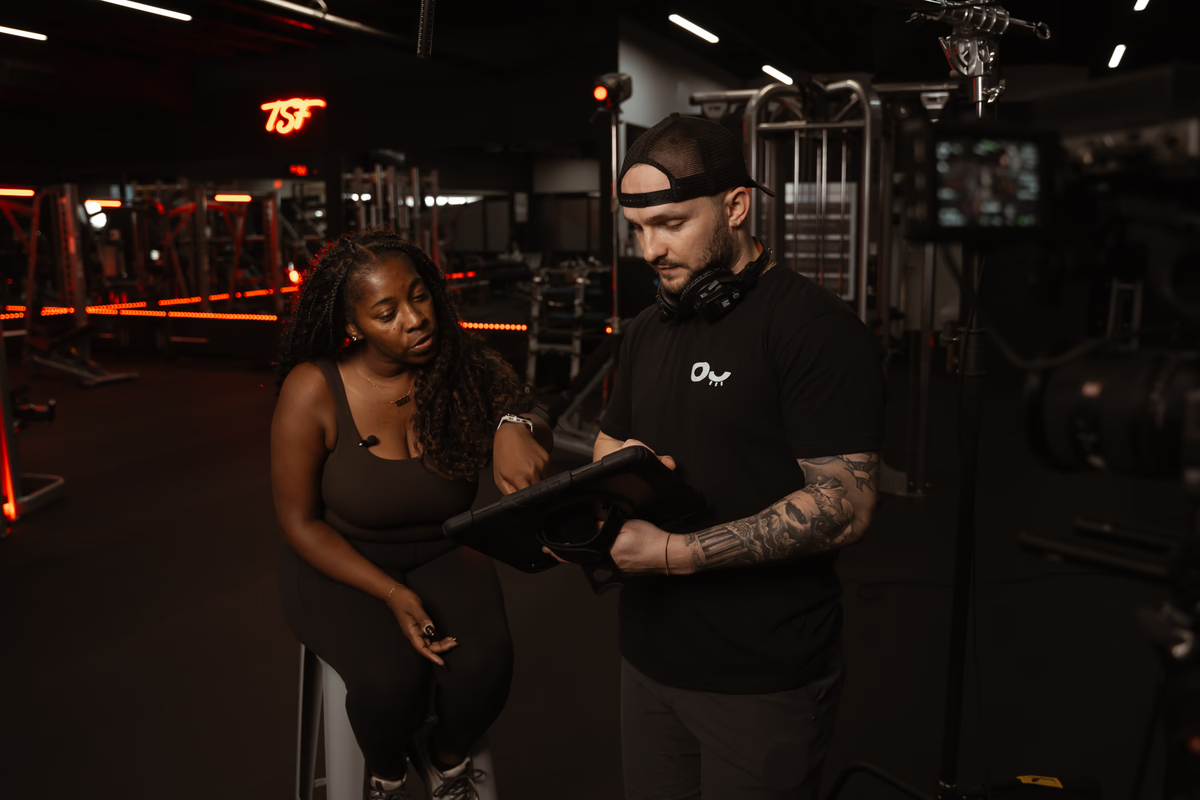
Production is the shoot. It includes: Director, DP, camera operators, lighting crew (gaffer, grip), audio technician, on-set producer, and any talent or location fees.
Equipment: Camera package, lenses, lighting, audio, grip, and any specialty equipment (drone, gimbal, steadicam, teleprompter). For studio productions: studio rental and in-house equipment packages.
A professional corporate video shoot typically runs 1–3 days. Half-day rates are available for simpler productions but rarely make sense for anything requiring multiple setups or locations.
Phase 3: Post-production
Post-production represents 30–40% of total project cost on most corporate productions and takes 2–6 weeks depending on complexity.
Post-production services include: Assembly and rough cut editing, client review and revision rounds (standard is 2–3), color grading and correction, sound design and mix, music licensing and integration, motion graphics and titles, lower thirds and on-screen text, visual effects (if required), format delivery (multiple aspect ratios, codecs, compression settings for each platform), and closed caption/subtitle files if required.
The deliverable list should be agreed before post begins, not discovered as the edit progresses. Adding a format variant, a subtitle file, or an additional cut-down after the edit is locked adds real cost and time.
What drives cost
Shoot days: The most visible variable. Each additional shoot day adds crew costs, location costs, and equipment costs.
Talent: Professional on-camera talent (actors, presenters) has rates that vary significantly by experience, usage, and exclusivity. Union talent adds residuals and usage restrictions for broadcast.
Post complexity: A talking-head interview video with b-roll is straightforward post. A motion graphics-heavy brand video with animated infographics, 3D elements, and complex VFX compositing is a different scope entirely.
Format delivery: Delivering in three formats (broadcast, web, social) is a different scope from delivering one. The full deliverable list is part of what gets locked in the brief.
Common scope additions after a project starts
Flagging these upfront avoids the conversation later: additional format variants (aspect ratios not in the original brief), subtitle or closed caption files, music licensing for additional platforms or territories, additional revision rounds beyond what's included in the proposal, script changes after production has begun, and extended post timelines due to undiscovered footage issues.
The deliverable list works best as a contract document, every format, every variant, every post deliverable defined before the project starts. That’s how we run it. Scope additions mid-project are the most avoidable cost in production.
At LOOK, corporate video production runs through one integrated team, pre-production, shoot, and post are handled by the same director and crew, with in-house editing and no handoffs between departments. If you have a corporate video project in mind and want to understand scope, the brief link below is the right starting point.
Frequently Asked Questions
About the Author

Lear Johnson
COO, LOOK Studios