
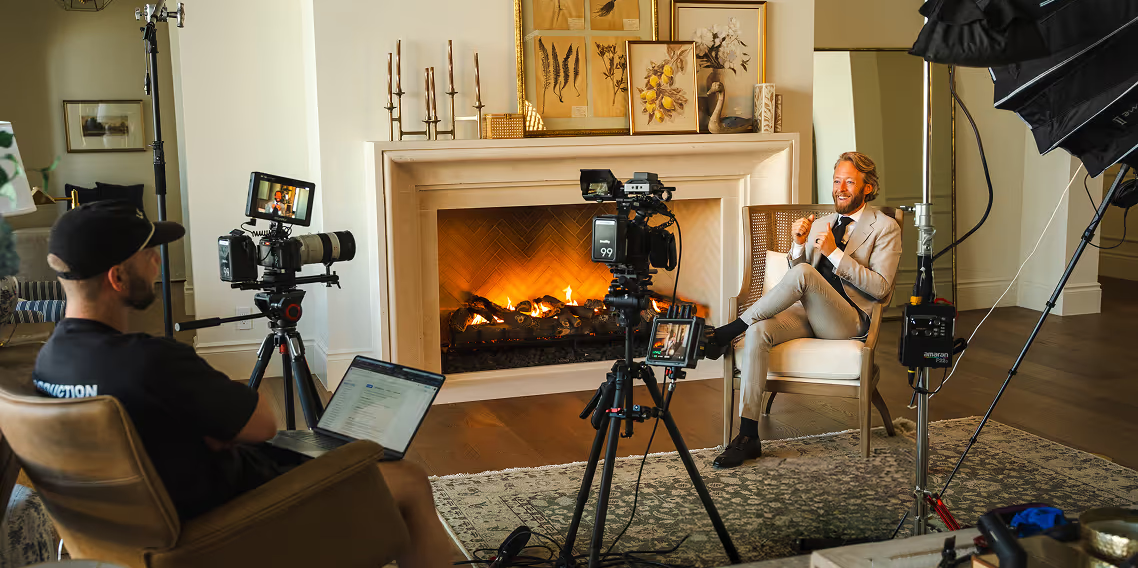
A corporate video production company does more than show up with cameras. Here's how to understand what you're hiring, what to look for, and what separates good from generic.
What You'll Learn
- What a corporate video production company actually does
- The difference between a production company, a video agency, and a freelance team
- What to evaluate before hiring
- Red flags to watch for when reviewing proposals
A corporate video production company takes a client’s business objective and produces a video that serves it, from pre-production through delivery. The term covers a wide range of capabilities, from small teams handling internal communications to full-service companies producing national campaigns for enterprise brands. Before you start evaluating proposals, understanding the category helps you know what to look for.
What a corporate video production company does
At its core: a corporate video production company handles pre-production (creative development, scripting, logistics, casting), production (crew, equipment, shoot days), and post-production (editing, color, sound, motion graphics, delivery).
Some companies stop at production and hand the footage to your internal team or a post house. Others own the full process end to end. Both models work, what matters is knowing which you’re hiring and planning your project accordingly.
Production company vs. video agency vs. freelance team
Production company: A dedicated team with crew, equipment, and a post-production infrastructure. Usually director-led. Works directly with clients or through agencies. Handles projects from concept through delivery.
Video agency: Typically sits between the client and the production company. Handles strategy, creative direction, and campaign management. Subcontracts production work. Appropriate when you need brand strategy and video as part of a larger creative campaign.
Freelance team: One or two individuals handling production and sometimes editing. Appropriate for smaller-budget projects, internal content, or when you need a specific skill set.
What to evaluate before you hire
The director. In commercial and corporate production, the director’s sensibility drives the creative output. Ask specifically who would direct your project, not just which company you’re hiring. Request work from that specific director or creative lead.
Post-production ownership. Where does the footage go after the shoot? If editing is outsourced to a separate post house, you're adding a communication layer and a handoff that creates inconsistency. In-house post means the editor knows the footage, knows the director's intent, and can move faster.
Client references. A reel shows you what a company can do at its best. Client references tell you what it’s like to work with them, how they handle revisions, how they communicate on set, how they respond when something goes wrong.
Red flags when reviewing proposals
Generic reels. A reel full of technically polished footage that could be anyone's brand signals a company that executes well but doesn't differentiate creatively. This is fine for lower-stakes internal production. For brand content that needs to stand out, it's a signal worth noting.
No named creative lead. If a proposal doesn't tell you who specifically would be directing or producing your project, ask.
Unclear post-production process. If you can't get a clear answer on who edits your footage and what the revision process looks like, ask before you sign.
Vague scope. A proposal that says 'one commercial video' without specifying deliverables, format variants, revision rounds, and final delivery specs is leaving a scope conversation for a worse moment. Get it locked before the project starts.
How LOOK is structured
LOOK is a director-led production company. Every project goes through a named creative director. Post-production is in-house, the same team that was on set edits the footage. We handle corporate video production for brands and agencies who need the level of craft that typically requires a larger budget, without the overhead of a large agency structure.
If you want to see the work before you talk, the work grid is the right starting place. If you want to understand what a project with us actually looks like, the brief link is below.
Frequently Asked Questions
About the Author

Lear Johnson
COO, LOOK Studios