
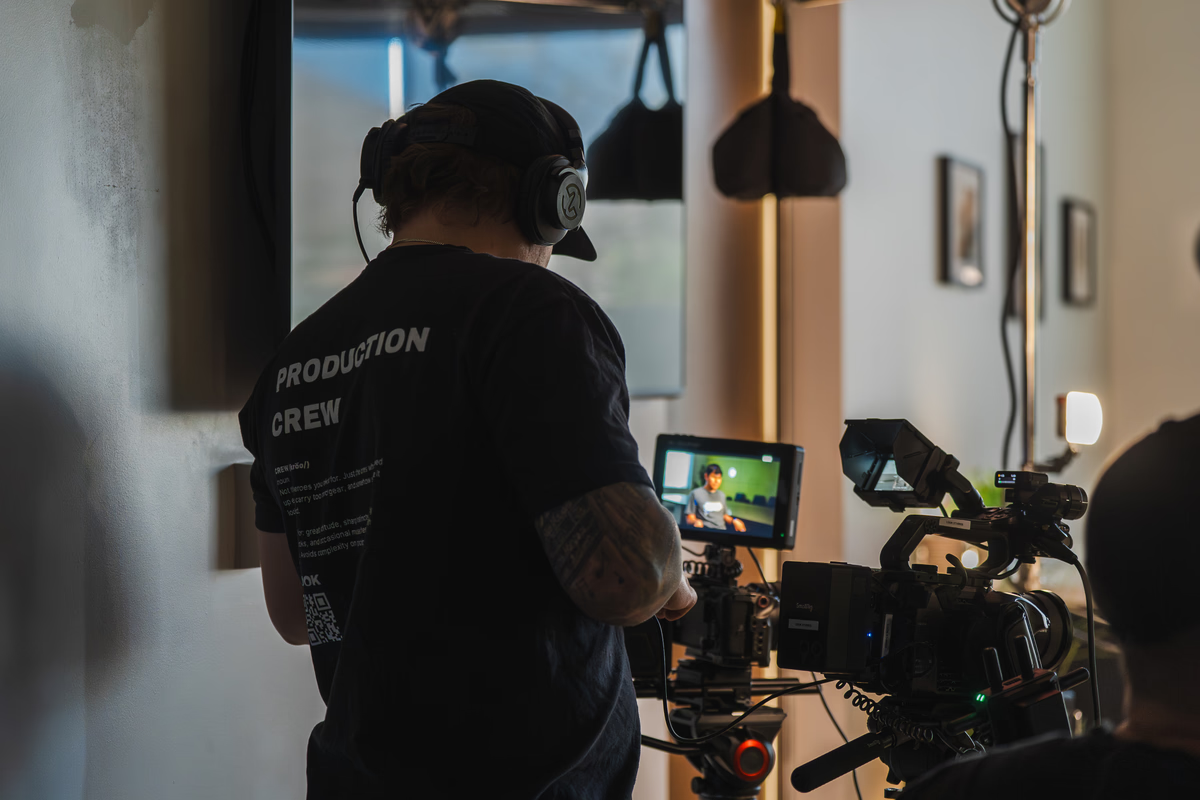
Written testimonials are easy to fake and everyone knows it. Video testimonials are hard to fabricate and buyers respond to them differently. The conversion data across 8 client A/B tests.
Everyone knows written testimonials can be fabricated. Buyers know it too. The five-star review with a stock photo avatar has been so thoroughly gamed that most buyers discount it entirely in their purchasing decision. Video testimonials operate in a different trust register — and the conversion data across eight client A/B tests makes the case definitively.
What the Conversion Data Shows
Across eight client A/B tests over two years — covering B2B services, SaaS, and consumer products — video testimonials consistently outperformed written testimonials on every metric that matters for conversion. Average improvement: 38% higher time on page, 27% improvement in form completion rate, 2.1x increase in the 'watch and convert' sequence where a visitor watched the testimonial and submitted a form within the same session.
The B2B data was the most pronounced. On landing pages for professional services clients where the average deal size exceeded $25,000, video testimonials increased qualified consultation requests by 44% compared to written testimonials with identical content. The written version of the same client quote, displayed prominently with a company logo and headshot, performed significantly worse.
Why Video Testimonials Convert Differently
The mechanism isn't production quality — it's authenticity signal. A video testimonial is hard to fake at scale. The viewer is processing face, voice tone, body language, and word choice simultaneously. Small hesitations, genuine enthusiasm, specific details — these micro-signals add up to a trust impression that text cannot replicate.
The specificity factor is particularly significant. Written testimonials tend toward generality: 'Great team, highly recommend.' Video testimonials, when properly captured, include the specific detail that makes a claim credible: 'We'd done two previous brand films with other companies and both ended up on a shelf. This one is on our homepage and we've closed three enterprise deals where the prospect specifically mentioned watching it.' That sentence, in that voice, with that face, is worth forty written reviews.
Where Testimonials Perform Best
High-converting placements, in order: landing pages adjacent to the primary CTA (a testimonial above or beside the submission form, not buried at the bottom of the page), sales proposal decks where a video embed functions as a warm introduction from a peer, and email follow-up sequences where a short testimonial clip is sent after an initial inquiry.
The placement mistake we see most often: testimonials on a dedicated 'Testimonials' or 'Reviews' page that nobody visits. Testimonials buried in a page that requires scrolling past the fold to find. The evidence should be unavoidable, not optional.
What Makes a Testimonial Video Actually Convert
The production value ceiling is lower than most clients expect. A testimonial that looks too produced starts to read as an advertisement, which reduces trust. The sweet spot is clean — good light, clear audio, an environment that places the subject in their natural context — without feeling staged. We shoot most testimonials in the client's office or workspace rather than a studio.
The structural requirement is specificity: a business situation before, a specific decision to work with LOOK, and a concrete outcome after. Testimonials that stay at the level of 'it was great' are nearly as unconvincing as written reviews. Testimonials that describe a specific transformation — before and after, with numbers when possible — consistently outperform.
Capturing Testimonials at Scale
We recommend booking testimonial captures on the last day of every production. The client's team is in the right context, comfortable on camera from the shoot, and the logistics are already in place. This approach means production clients naturally accumulate a testimonial library without scheduling additional shoots.
Remote testimonial capture, done properly, performs nearly as well as on-site. We send clients a capture guide: lighting setup using a window, acoustic environment, camera framing relative to eye level. The resulting footage, lightly graded, is indistinguishable from on-site production for most digital uses.
Written testimonials tell buyers what to think. Video testimonials show buyers something real. The brain assigns very different weights to those two inputs when a purchase decision is at stake.
About the Author

Niko
Director of Photography
Niko is LOOK's Director of Photography — the person responsible for every frame. He controls light, camera, and composition on set, working directly with directors to translate creative briefs into images. The LOOK aesthetic — precise, cinematic, earned — is his visual language. If it looks incredible, Niko lit it.