
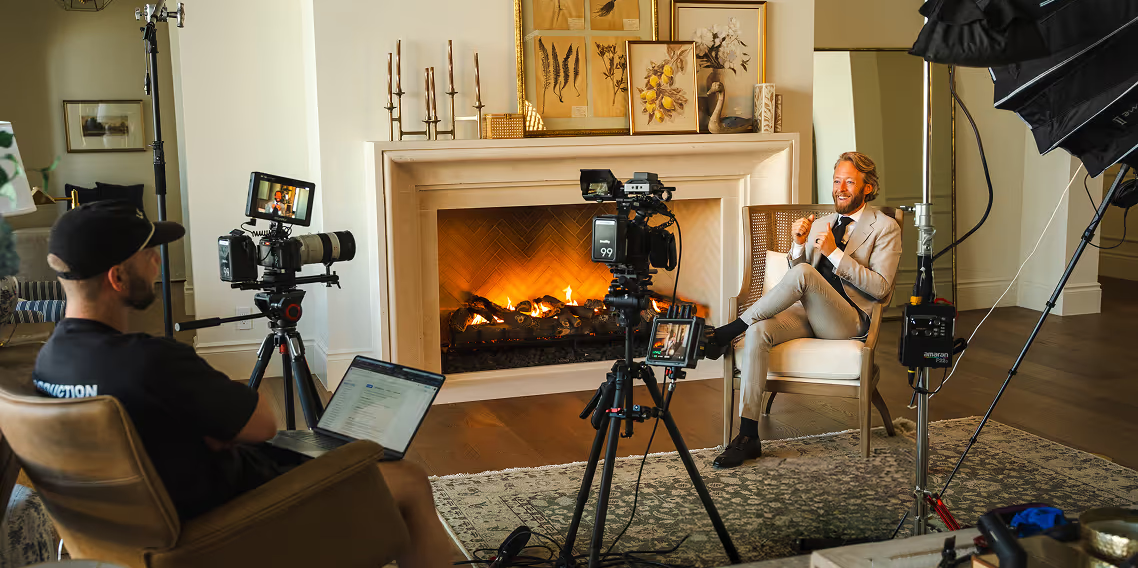
The hallmarks of bad corporate video are easy to list: stiff delivery, stock music, b-roll of handshakes. Here's how to brief a production that avoids all of them.
You know bad corporate video when you see it. The CEO reading from a teleprompter. The stock music that sounds like every other explainer video. The b-roll of people shaking hands in a conference room. It's not that these things are wrong — it's that they signal to viewers that the company didn't care enough to try.
Why Corporate Video Defaults to Bad
Corporate video defaults to bad for one reason: approval by committee removes every interesting decision. When five stakeholders can veto creative risk, the only content that survives is content that offends no one. Content that offends no one moves no one. The result is video that the company is technically satisfied with and that audiences completely ignore.
The other culprit is the brief. Most corporate video briefs describe what the video should contain, not what the viewer should feel. 'Cover our three product lines, include the new facility footage, make sure leadership has screen time' is a content list, not a creative direction. A content list produces a video that covers the bases and does nothing else.
What Actually Makes Corporate Video Work
The corporate videos that work are the ones where someone — usually the client, not the production company — decided that honesty was worth the risk of imperfection. The executive who tells a real story instead of reading messaging. The team member who laughs during the interview and doesn't get cut. The facility shot that shows real work in progress rather than a staged showcase.
Authenticity in corporate video isn't a production choice — it's a culture choice. The production company can create conditions for it: loose interview structures, conversational prompts, unscripted moments built into the shot list. But the organization has to decide in advance that real is better than polished, and that decision needs to survive the review process.
The Four Markers of Bad Corporate Video (and What to Replace Them With)
Teleprompter delivery. Replace it with a two-question interview structure: one question about the business, one about why the person cares. Let the subject talk for five minutes. Pull the 90 seconds that are actually interesting. The edit becomes your script, not the other way around.
Generic b-roll. The handshake, the whiteboard session, the overhead laptop shot — these exist because they're easy to capture and safe to approve. Replace them with footage of actual work: the thing your company does, being done, by real people. If it's unglamorous, that's fine. Unglamorous is credible.
Stock music. It tells the viewer you didn't care about this moment. Commission original music or use silence. Silence works more often than most producers acknowledge.
Over-produced graphics. Lower thirds that animate for four seconds before the name appears are a production company flexing their After Effects capabilities at the expense of the viewer's attention. Name, title, one second, done.
How We Approach Corporate Briefs
We always ask two questions before accepting a corporate video brief: who has final approval, and what is the single most important thing viewers should feel? If the answer to the first question involves more than two decision-makers, we have a conversation about the review structure before we start. If the answer to the second question is 'professional' or 'credible,' we push back. Professional and credible describe brands, not feelings. Feelings are: confident enough to take a call. Trusted enough to give them access to our team. Curious enough to want to learn more.
The companies producing corporate video that actually performs are not making different kinds of video. They're making the same kinds of video with a different internal agreement: that something real is worth more than something safe.
About the Author

Hayden
Executive Producer
Hayden built LOOK from a two-person crew into a full-service production company. As Executive Producer, he owns every project at the business level — client relationships, budget accountability, and final delivery. Nothing ships without his sign-off.